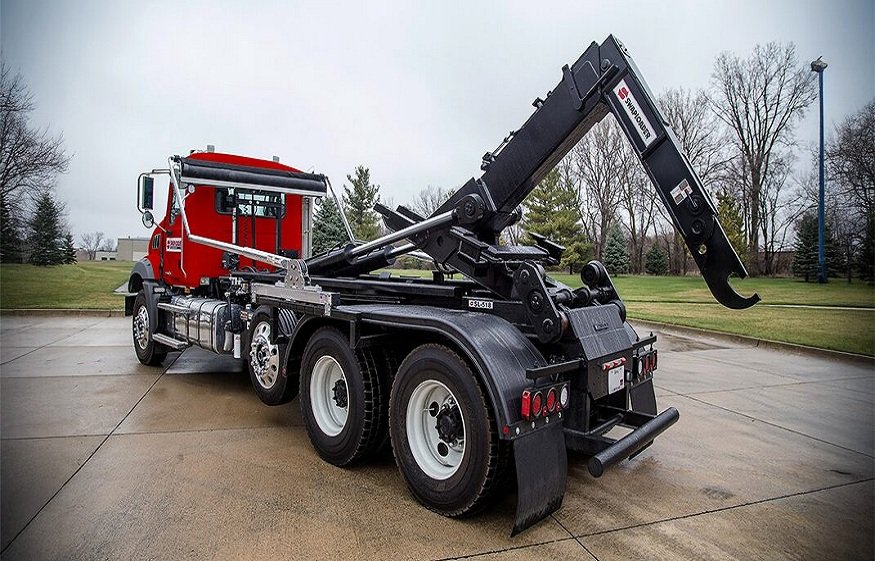
Important Features to Look for in a Galfab rolls-off trucks
14 Views
Choosing a roll-off truck is an important decision for any business involved in waste collection, construction cleanup, demolition, recycling, or industrial hauling. The right vehicle can help a company transport containers efficiently, maintain reliable service schedules, and manage demanding workloads. However, not every roll-off truck is suitable for every application. Buyers should compare hoist design, lifting capacity, chassis compatibility, safety equipment, maintenance requirements, and available options before making a purchase.
Galfab roll-off systems are designed for cable-style container handling and heavy-duty work. Understanding their main features can help fleet managers decide whether a particular configuration meets their business requirements.
1. Hoist Design and Container Movement
The hoist is one of the most important parts of a roll-off truck. It controls how the container is loaded onto the truck and unloaded at the destination. A system should be appropriate for the container dimensions, expected loads, and working conditions.
Galfab offers an Outside Rail series that uses an outside rail design with rollers. These rollers allow container long sills to move across the hoist frame while reducing direct metal-to-metal friction. This arrangement is intended to support smoother container movement during loading and unloading.
Buyers should ask how the hoist design works with their existing containers. Compatibility is particularly important for companies that operate multiple trucks and use standardized container sizes.
2. Hoist Capacity
Capacity should be one of the first specifications considered when purchasing a Galfab rolls-off trucks. A truck that does not have sufficient capacity for its intended workload may create safety and operating concerns.
Atlantic Heavy Duty lists Galfab Outside Rail hoist capacities of 60,000 pounds and 75,000 pounds. The correct choice depends on the weight of the containers and materials being transported.
It is important to understand that hoist capacity is not the same as the legal payload capacity of the complete vehicle. Chassis ratings, axle limits, container weight, load distribution, and applicable road regulations must also be considered. Buyers should work with a qualified dealer to verify that the complete truck is suitable for the intended loads.
3. Container Support Rails
Container alignment can affect the loading process. A container may approach the truck at a slight angle, particularly when the ground is uneven or the pickup location has limited space.
Galfab’s Outside Rail system includes container long-sill support rails. These rails help guide containers during loading and provide additional support to the long sills.
This feature can be valuable for businesses that regularly collect containers from construction sites, commercial properties, and other locations where positioning conditions may vary. Operators must still follow proper loading procedures and ensure that containers are compatible with the hoist.
4. Roller Design and Maintenance Access
Rollers are important components because they support container movement along the hoist. Their condition can affect the smoothness of operation and the amount of maintenance required over time.
The Galfab Outside Rail series includes outboard-supported side rollers. Its listed design also includes a greaseable roller shaft that can be removed with two bolts for easier replacement and maintenance.
Fleet managers should consider how accessible the main service points are and what routine maintenance will be required. Easy access can help technicians inspect components and address wear before it leads to more serious problems.
5. Safety-Related Features
Safety should be a priority whenever a truck lifts and transports heavy containers. Buyers should review the equipment’s safety features and confirm that operators receive appropriate training.
Galfab’s listed Outside Rail features include an autofold DOT bumper designed to fold forward. This can help reduce the chance of bending or hang-ups in landfill environments. The system also lists container locks, an hoist-up alarm, and a backup alarm among its standard features.
Additional safety-related options may include work lights and rear-view camera systems. The exact equipment supplied can vary, so buyers should confirm the specifications of the individual truck before purchasing.
6. Hydraulic System and Operating Performance
Hydraulic components play a central role in operating a roll-off hoist. The system must be appropriate for the selected equipment and the work expected from the truck.
Buyers should ask about the hydraulic configuration, oil reservoir, filtration, cylinders, controls, and recommended service intervals. The Galfab Outside Rail specifications list a 48-gallon oil reservoir with sight and temperature gauge and 25-micron filtration.
Atlantic Heavy Duty also lists an approximate two-minute loading cycle time for the Outside Rail series. Actual cycle times can vary with operating conditions, equipment configuration, and the operator’s procedure. It is useful to discuss expected performance with the dealer rather than assuming that every job will produce the same result.
7. Optional Equipment
Optional features can make a roll-off truck more suitable for a particular business. Galfab lists several options for its Outside Rail systems, including tarping systems, toolboxes, auxiliary stops, different fender materials, pintle hooks, onboard scale systems, and additional work lights.
A tarping system may be important for companies that need to cover loads during transportation. Toolboxes can provide storage for equipment used during daily operations. Onboard scales may help businesses monitor load weights, subject to applicable requirements and proper calibration.
Rather than selecting every available option, buyers should identify which additions will provide practical value for their routes and customers.
8. Chassis Compatibility
A roll-off hoist must be matched with a suitable truck chassis. The chassis needs to support the equipment, containers, and expected loads while meeting applicable weight and road requirements.
Factors to review include gross vehicle weight rating, axle ratings, wheelbase, engine, transmission, suspension, and available mounting space. Buyers should also consider the locations where the truck will operate. Tight streets, construction entrances, and uneven job sites may influence the preferred configuration.
The dealer should confirm that the chassis and hoist are compatible before the purchase is finalized.
9. Service and Parts Availability
Long-term ownership requires access to maintenance, replacement parts, and technical support. Even a well-built truck will need inspections and repairs throughout its working life.
Atlantic Heavy Duty provides roll-off truck sales, parts, and service support and works with Galfab equipment. Buyers can discuss maintenance requirements, parts availability, warranty details, and service arrangements before selecting a truck.
A clear service plan can help fleet managers prepare for routine maintenance and respond more effectively when repairs are needed.
Making an Informed Purchase
A Galfab roll-off truck should be evaluated as a complete working vehicle rather than by looking at one feature alone. Hoist capacity, container compatibility, chassis specifications, safety equipment, maintenance access, and optional features all contribute to the suitability of the truck.
Businesses should prepare a list of their typical container sizes, material types, expected load weights, routes, and job-site conditions. This information makes it easier to compare available configurations and avoid purchasing equipment that does not match the actual workload.
By reviewing these factors and speaking with an experienced dealer such as Atlantic Heavy Duty, buyers can make a practical decision about a roll-off truck that supports dependable operations and long-term fleet needs.